
I recently made a video all about ‘The Mystery of Leonardo da Vinci,’ exploring why history’s most famous polymath never shared most of his discoveries.
Towards the end of the video, I ask questions about balancing creativity and sustainability, spotlighting the tension between the artistic and commercial worlds. I think this question is interesting on all levels—on a macro, corporate and institutional level we look at what has happened to Hollywood as an example, where filmmaking feels increasingly formulaic and political. Elsewhere, tourism is known for taking special, naturally pure places and making them feel overly commercial.
Then there are the personal, everyday examples of this tension. People negotiating careers are often torn between freely expressing themselves versus doing what is practical and financially responsible. We grow up naive and idealistic—our earliest career ambitions are to be princesses, firefighters, astronauts, and doctors. These heartfelt ambitions are usually tapered in by realism as we age.
How much is lost in this evolution? Commercialisation often comes with the loss of a certain spark and wholesomeness. That’s the perfect link back to da Vinci, who certainly was not commercial.
You might not know it but despite his brilliance, Leonardo da Vinci was never wealthy. He regularly abandoned commissions and ignored contracts. He’d agree to do portraits—jobs for actual money—but not bother to start them. Instead, he’d go off to pursue his endless list of peculiar interests… studying the tongue of a woodpecker, asking Giannino how the Tower of Ferrara was walled, or documenting people’s noses in his sketchbook.
This behaviour reminds me of all the people who don’t follow through (Stan, if you’re reading this, you know I’m thinking of you). I also think of our dear friends in the building industry… they must read about da Vinci because they also don’t like delivering on time.
Where I’ve seen this behaviour in its highest concentration was Nepal, amongst people of the so-called ‘underdeveloped’ world, people largely untouched by capitalistic systems and Western ways of life. For starters, people there have no concept of time. They literally do not have a word for it. Arrange to meet someone at 3pm and they’d show up two or three hours late—if you were lucky. For modern civilisation to work, people have to get shit done. That’s hard when you don’t follow through on promises, show up for work, or bother to collect payment for your goods and services!
I’ve never heard someone quote Jerry McGuire so much as Nick, my friend and the brave young fool who ran this work in Nepal:
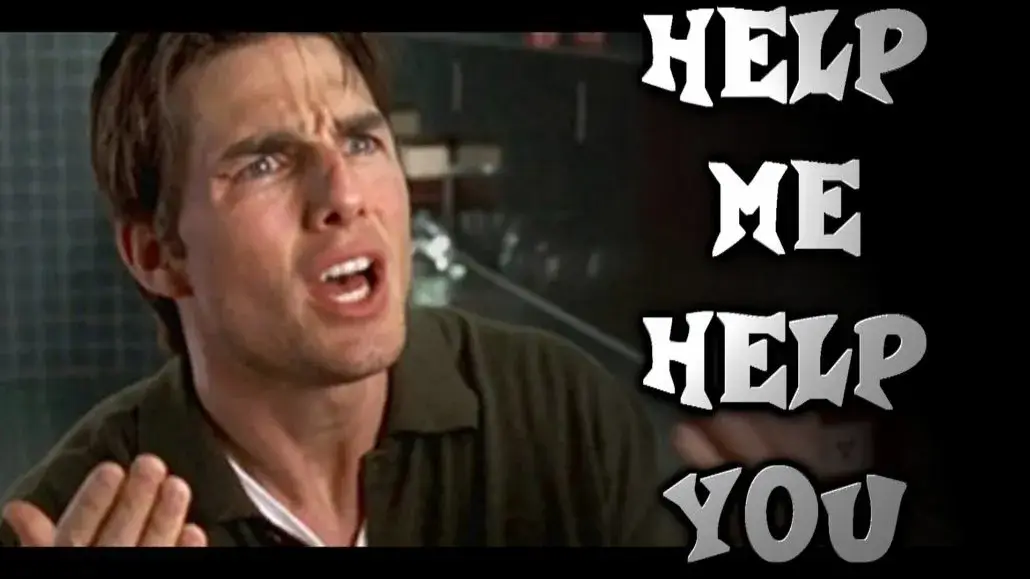
Maybe he should have been checking their secret notebooks.
Da Vinci’s behaviour might be considered brazen, ignorant or just stupid. It might have been Attention Deficit Disorder. Whatever the reason, it looks like it had its upside in terms of leading da Vinci on to his pioneering breakthroughs, but it came at a cost.
This taps into the obvious, age-old tension between the commercial world with its economic realities, and the creative spirit. My belief is the human spirit we all have is inherently creative. I don’t mean everyone is a painter or playwright, but that there’s a deeper quality to all of us, I guess the ‘soul’ part of us, and that force is defined by authenticity and creativity. To me, creativity is at the heart of humanity, and humanity is deeply tied up in creativity and creation.
Creativity is not limited to The Arts—the best examples of creativity aren’t so much the things we make in the world as the stuff we conjure in our heads 😉 🤣. That being said, the Arts are usually the most obvious expression of creativity, and it’s artists who famously battle this tension between being true to their art form and making ends meet. The tension comes in when what feels natural conflicts with what’s practical, responsible, or beneficial to our interest in surviving. Whatever opinion we have of da Vinci, I think we can agree his approach to this tension was very unorthodox, but also authentic to him. He had a real ‘fuck it, this is what I want to do’ type vibe.
Now don’t misunderstand me here, I think a world full of da Vinci’s is a scary idea. Imagine a doctor, fresh off diagnosing you with Stage 3 Cancer saying, ‘Sorry, I don’t want to continue this conversation, I feel like painting, or studying the tongue of a woodpecker.’
On the other hand, there are people like my buddy Typher, who is currently agonising over continuing a corporate law career or transitioning into criminal law, something he feels more passionate about but pays much less. With the prospect of having a family in mind, he feels torn between providing them a high-quality life and chasing his bliss. That’s why, whenever I go back to da Vinci and revisit his non-formulaic formula for creativity, I also revisit this question:
Does our need for commercial viability and sustainability hamper us too much?
While some of us fit autonomously and authentically within a trade or industry that pays enough, others, like me, ride a split—doing one thing in the interest of money, and another for passion, purpose, self-entertainment, or to scratch some deep itch.
Funnily enough, as someone who has spent a fair amount of time wondering ‘what to do for money?’ I’d prefer to work on and develop a side career than do paid writing work for other people. When it comes to writing, I don’t have enough patience to consistently write for others if the work doesn’t align with my creative interest. Where I currently feel best is keeping my written works as free from financial constraints and pressures as possible, and having the freedom to conjure whatever it is my bizarre mind wishes to conjure on a page.
It appears I’m not alone. In Ayn Rand’s book The Fountainhead, her heroic main character, Howard Roark, is a passionate architect who dreams of designing buildings with artistic merit. He can’t stand the soulless, uninspiring standards in the world around him. His character is contrasted to Peter Keating, an old university friend who has much more commercial success, but ironically lacks talent.
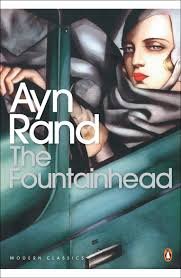
Roark struggles financially. When jobs come along that could save his business, something inside him compels him to turn them down—all because the jobs still encroach on this idea of artistic purity, and he can’t bring himself to deliver what a client wants when he feels it’s the wrong design. At one point, he leaves architecture to work on a quarry—because if he has to do something for money, or to survive, he’d rather it be something away from his passion.
Roark, a fictional character, has the same bug as da Vinci. Logically they should do some jobs for the money, and ease up on their ideals.
Or should they?
Our society is filled with people who cannot, as hard as they try, fit inside the available round holes. You could argue this is stubbornness or entitlement—a refusal to get on with it and get to work. But it can also be something else.
Whatever the reason, I think these people are a pain—but also, a gift. Even though they don’t technically contribute to ‘the economy’ as much as others (or at all in some cases) they serve as a reality check to the rest of us. It’s a reality check I got on my brief visits to Nepal, too, and seeing those people who were ill-suited to the ways of capitalistic society. As someone who has felt what Roark feels in The Fountainhead, who resonates with da Vinci’s dilemma (even if I don’t have his level of talent…), I think it’s good to be reminded that, as brilliant and necessary as modern civilisation is, it is in some part unnatural. And that is okay.
Play, and Balance
The important point to consider in all this is the importance of play and balance. Play is very important in early childhood, but I think it’s very important in older age too, and that none of us should ever totally grow up. Ideally, we all have room for some mature playfulness in our lives.
When it comes to work, specifically, I reflect on how important this is. As someone who is regrettably something of an expert in non-viable projects, who has had many different business ideas or YouTube/Social Media channels, and written two books (the cash cows those things are…) it’s clear to me how, not only valuable, but beautiful unconditional play is. As da Vinci demonstrated with his unusual life and pattern of unpublished work, unconditional play and exploration lead us to all sorts of discoveries, breakthroughs and creative new ideas—things that are often satisfying in their own right, regardless of what comes from them. The book I spent the last two and a half years writing came about almost entirely in this way—and the next one has, too.
Conclusions
It would be nice if society had a way of helping people create and explore more. Then again, the realist in me knows a lot of what people produce isn’t very good—so that has to be factored in. Alas, maybe things should stay as they are. Maybe being a bit too responsible is our best bet, even though it stifles a certain magic. If society were too da Vinci, we’d have a lot more broke artists to support.
I guess my uplifting conclusion is that we should let people play around a lot more—but only if they’re good 🤣.
For more writings or announcements on book releases, sign up to ‘The Doorman’ below, or see more options at Everything Joe.
